
News
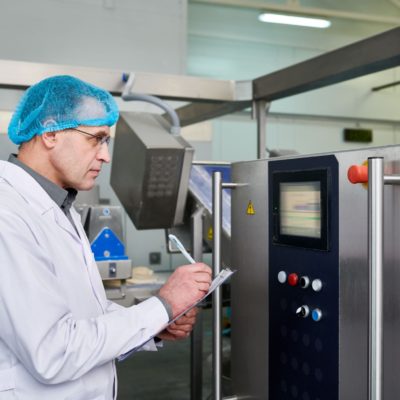
How to Identify, Quantify, and Mitigate Risk in Industrial Operations
A key responsibility of executives and managers in manufacturing is that of risk management. This refers to the obvious risk of physical operations and staff protection, but it also includes quite a bit more: risk to contracts, availability of brands of the direct employer and those of other clients, reputation(s), regulatory, and risk to public safety and health are all increasing concerns with the operating level of a senior executive or manager.
Risk identification is a critical first step; without which, corrective actions cannot be undertaken or could possibly be misguided. Because risks evolve constantly, it is rare that they can be spelled out in a succinct and comprehensive volume. One obvious solution is to install the correct staff in the tiers immediately below the executives but that often raises questions about the specific qualifications of these employees, their tenure and familiarity with every facet of their role within that organization, and whether an overarching net has been cast to identify and compartmentalize relative risks. Further concerns arise around whether an internal team is free of groupthink and whether they possess the proper experience, qualifications, and motivations. (more…)
Read More | Posted In: Bakery Industry, Beverage Industry, Chemical Industry, Food Industry, Life Science Industry, Metals Industry

The Process Functional Ecosystem
Companies that operate in multi-step, multi-ingredient batch processing operations employ a combination of complex procedures, business and operational systems, and communications. The range of tools and machinery used to process a potentially vast array of ingredients and process steps are what it takes to make processors successful. Entire working cultures emerge from these operations that foster a focus and achieve positive outcomes.
The more specialized the market and operation, the lower number of people who operate within that domain. This doesn’t always allow for regular interaction with a broad spectrum of manufacturing peers, which can leave individuals and organizations feeling they are so unique that they are relatively isolated. They frequently feel little confidence that people outside their close-knit internal group can effectively understand, let alone support them. The possibility exists that they are rare, but they are not entirely unique and there are outside firms that are also closely aligned and, in fact, true peers as well.
ECS Solutions (ECS) operates upon this landscape. They have established a collective corporate consciousness that is aligned with the DNA of their core clients: batch processors. ECS is immersed in the behaviors and characteristics of these clients, and it is reflected in nearly every aspect of their operation. (more…)
Read More | Posted In: Bakery Industry, Beverage Industry, Chemical Industry, Food Industry, Metals Industry, News
Dynamic Perspective Objects with Sepasoft’s Batch Module
One of the most exciting things about Sepasoft’s Batch and Procedure module is that it enables tight integration between the process cell (as it is functionally defined) and the graphical interface (how it is presented to the user). By using the various tools in the Ignition toolbox (creative scripting, querying, and binding), it is possible to create dynamic views that represent the ISA-88 objects of a process cell. As the process cell definition changes (new units, new phases, etc) these dynamic objects automatically update as needed. This allows for less development time, a consistent user experience, and a lower maintenance control system. (more…)
Read More | Posted In: Bakery Industry, Beverage Industry, Blogs, Chemical Industry, Food Industry, Inductive Automation, Life Science Industry, Metals Industry, News
ECS Eliminates Bottlenecks with Flexible Packaging Solution
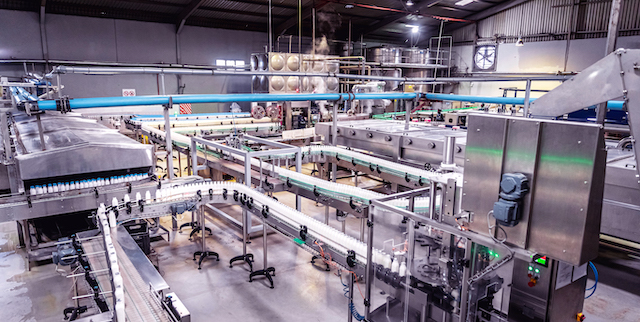
Industrial systems are generally designed with a perfect balance between product manufacturing and packaging output. Changes to output requirements, product makeup, or packaging requirements frequently create imbalances known as process bottlenecks. The job of process and industrial engineers is to identify the slow points within the complete process and develop solutions to eliminate obstructions. Today’s solutions to a slow point in the middle of the line, for example, solve not only the current issue, but often highlight the next weakest link in the manufacturing chain and the process then repeats.
This situation is particularly prevalent in large-scale food manufacturing where systems designed to create one product are frequently adapted for future needs. Simple changes to ingredient makeup or quantities can upset the balance within processing systems or require the insertion of process steps that are outside of the equipment’s original intent. Perhaps just as frequent are changes in packaging that mandate the addition of new primary or secondary packaging machines to be used in conjunction with or instead of a line’s original machinery. All of these are good problems to have in that they indicate a flexible level of operation, and they create opportunities for manufacturers to support more customers with more products. (more…)
Read More | Posted In: Bakery Industry, Beverage Industry, Food Industry
Surviving the Great Resignation

A rapidly decreasing number of technical personnel are available who can install and maintain the higher-end equipment used in manufacturing today. “The great resignation and/or retirement” movement, along with changes associated with the recent pandemic landscape, has sent many highly qualified workers to the exits in search of new and often altogether different opportunities. The stage has been set for decades with the wave of baby boomer retirements churning towards manufacturers. Parallel to this has been the increased reliance on high-tech manufacturing machines and processes. These two situations pair well with the idea of future-proofing low-to-mid complexity manufacturing but, in an interesting juxtaposition, amplify the core problem. (more…)
Read More | Posted In: Bakery Industry, Beverage Industry, Blogs, Chemical Industry, Food Industry, Life Science Industry, Metals Industry

Batch Forensics: Class-based Unit Coordination Utilizing Link Groups
Take advantage of product functionality to coordinate activities between units.

Read More | Posted In: Bakery Industry, Beverage Industry, Blogs, Food Industry
Batch Forensics: The Case for Procedural Unit Tags
A Unit Tag is a class-based tag that identifies a characteristic of a unit.
The values of these tags are usually associated with information captured via the control systems analog and digital Input cards, signals like Temperature, Weight, Pressure, Level, Conductivity, pH, Level Switch, etc. Other unit tags can contain the status, state, material of construction, or any other user-defined attribute that can enhance the recipe editing capability and execution.

Read More | Posted In: Bakery Industry, Beverage Industry, Distilleries, Food Industry
Batch Forensics: Additional Report Parameters Enhance Process Performance
 Understanding your process performance starts with having unambiguous data that is contextualized. This data provides information that quantifies and qualifies the different aspects that provide insight into the overall system performance. This data ends up in a repository and gets analyzed to produce actionable information and these reports may look at different aspects of the activities required to make products or to clean the equipment. By looking at the process from the ISA 88 and ISA95 point of view, we are able to provide additional context to the information for which the basic activities are reporting.
Additional information may be added to provide more insight into the activities related to:
- Quality – (amounts, tolerances, durations, temperatures, lethality, etc.)
- Cost- (materials, energy, personnel, equipment, etc.)
- Material information – (lot ID, material properties, storage locations, etc.)
- Personnel – (who is performing tasks, signoffs, etc.)
- Energy – (transport, heat/cool, mix, etc.)
- Equipment – (raw material source, equipment utilization, portable equipment information.)
– as well as other aspects that can be used to make informed decisions. (more…)
Read More | Posted In: Bakery Industry, Beverage Industry, Blogs, Chemical Industry, Food Industry, Life Science Industry, Metals
Batch Forensics: The Case of the FactoryTalk Batch Timers
Frequently, we hear new and seasoned engineers say they do not use the Rockwell FactoryTalk Batch (FTBatch) Standard timers ($timer) because they cannot interact with them or can’t tell what the timer’s status is, as they do with controller-based timers. However, our Batch Forensic experts explain that this is not the case.
Standard Recipe timers require no design, implementation, testing, commissioning nor validation as required by timer Phases implemented in the controllers. Standard recipe $timers can be applied at all levels of the procedural model (Procedures, Unit Procedures, and Operations) Standard $timers can be used in as many placed as required, each instance of the timer is given a name defined by the recipe author that can be associated with the activity at hand. Timers are automatically added to the units configured on the area model just like the $Null Phase.
Read More | Posted In: Bakery Industry, Beverage Industry, Blogs, FactoryTalk Batch, Food Industry, Life Science Industry
Batch Forensics by ECS Solutions
The term forensics refers to the application of scientific knowledge to problems, especially scientific analysis, and data analysis of physical evidence. In a plant environment, data and scientific analysis can be the key to discovering opportunities to improve the automation solution that exists, forensic tools can be implemented in all phases of the life cycle of a system, but ideally, they should be considered during the design phase.
Read More | Posted In: Bakery Industry, Beverage Industry, Blogs, Chemical Industry, Distilleries, Food Industry, Life Science Industry, Metals