
News

Using Ignition Scripting Libraries
Volumes have been written about the proper use of tools within a software application and how to create projects for maximum efficiency in both development and execution. Senior programmers and leaders of development teams strive to write and deploy robust solutions that are simple, efficient, easy to debug, and easy to adapt in the future.
Ignition is a multi-faceted tool that continues to revolutionize industrial applications. The package includes a powerful scripting tool that has undergone significant upgrades from versions 7 and before and has existed in its current form since version 8. When combined with the software’s other capabilities and using a disciplined approach to the application of all the tools, Ignition can give you efficient and optimized solutions that can solve most SCADA and business integration challenges.
Read More | Posted In: Blogs, Inductive Automation

Ignition Perspective® Module
Human-machine interface (HMI) vendors have been promising a utopia based around web-based technologies for over two decades. The prospect of simply providing a web address to anyone within an organization that leads to a fast-loading, full-power supervisory control and data acquisition (SCADA) system has been on most factories’ wish list for a long time. After all, internet page tools and functionality have far outpaced advancements in SCADA software over the same time. The advancements seem to leap forward every time someone reloads a page, with new widgets and tools available almost daily. When coupled with hardware developments like high contrast screens; enhanced touchscreen operations; and capabilities like Bluetooth, accelerometers, geolocation, and more; a flexible, web-based option has been coveted.
What many casual users fail to understand about HMI solutions is exactly how tightly the software is connected to the factory floor controllers. This connection via high-security networks, VPNs, and masks, can be tricky to navigate, particularly when the architecture is intentionally complex to provide security for the systems. Further, most people don’t realize the architectural complexity of software that link to sometimes multiple databases and remote data sources, where gigabits of proprietary information streams into and out of the SCADA application. It has been the responsibility of the integrators of these solutions to protect would-be users from themselves in a lot of applications. Poorly developed programs could create vulnerabilities to the operation of equipment, expose floor workers to potential risk, and possibly allow trade secrets to escape into cyberspace.
Read More | Posted In: Bakery Industry, Beverage Industry, Blogs, Chemical Industry, Distilleries, Food Industry, Inductive Automation, Metals Industry, SCADA

ECS Helps Private Labeler Spring Into Action
When opportunity knocked for a midwestern US private label condiment and sauce manufacturer, their relationship with ECS Solutions, Inc. (ECS) helped them to excel. Success in private-label food manufacturing is often a matter of being able to accept new projects when a chance arrives to expand or acquire new business. Raw capability is a driving factor, but modern manufacturing is not necessarily built on having volumes of idle capacity sitting and waiting for the next project to arrive. These endeavors frequently spawn from a quick flex in schedules, skillful leverage of less-than-optimized equipment, and/or an effective change in technology. Sometimes entirely new operations must rise from nowhere in a seemingly unachievable timeframe, as was the case with ECS’ client.
When this midwestern manufacturer was presented with a chance to land a series of large contracts with a well-known label they quickly pressed all their assets into action to create an entirely new red sauce kitchen. Long lead time items were ordered with less-than-optimal information available. Equipment that could be reused from their local storage cache was inspected, tuned up, and prepared for deployment. Their existing relationships with local contractors allowed them to begin infrastructure preparation immediately and quickly move into detailed piping and wiring. Perhaps most importantly, their relationship with ECS allowed them to quickly assess the project and create a framework so that budgets could be established and bids obtained. It was quickly evident that a fully integrated solution from ECS was not only possible but that it would be integral to long-term success because it would allow for as much effective automation as reasonable, thus minimizing the number of new operating staff members to run the system once complete.
Read More | Posted In: Case Studies, Food Industry
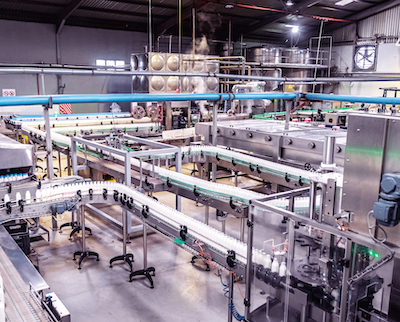
Systems Integrator Extends Packaging OEM’s Reach
Modern packaging plants want tightly integrated line solutions that run their array of products with fewer operating personnel and the easiest possible means for equipment maintenance. Buyers increasingly purchase large-scale packaging solutions from a single vendor with the expertise to deliver these applications. This presents challenges to equipment OEMs, many of whom offer a few niche or high-level equipment with a menagerie of complimentary machines. Many project suppliers are chosen based on their proven ability to handle a specific, complex operation around which the line is anchored, and the additional machines become part of the overall project by default.
It is generally not feasible for focused machine OEMs to also provide the broad-reach solutions required to fully integrate these complex lines. The breadth of staff required to achieve the expertise for detailed machine control along with the adjacent line operations and IT connections would be unbearably expensive for most machine builders. This is especially true because fully integrated options are not part of every option, so OEMs end up with some of their highest-end staff idle on many of the simpler applications that they tackle. These extended solutions frequently come via a dedicated line systems integrator. ECS Solutions (ECS) is a systems integrator that has delivered a huge variety of manufacturing solutions for more than 45 years including highly integrated packaging lines.
Read More | Posted In: Case Studies, Food Industry, Inductive Automation

Embracing the Connections of Automation Projects
The ECS Solutions (ECS) team works on all manner of automation projects, from small to large and from very simple to highly complex. Many of these projects have a major impact on the success of their clients but few are more satisfying than when a project’s results are a dramatic streamlining of plant operations tied in seamlessly with new or upgraded automation.
The most effective manufacturing companies enjoy a harmonious tie-in between the automation that exists, regardless of the level or magnitude, and the other systems that complete the plant operations. Standardized procedures, reduced waste & increased quality, compliance with contracts and regulations, and better employee contribution are all hallmarks of the best manufacturers, and all lead to increased profits.
Read More | Posted In: Case Studies, Food Industry, SCADA
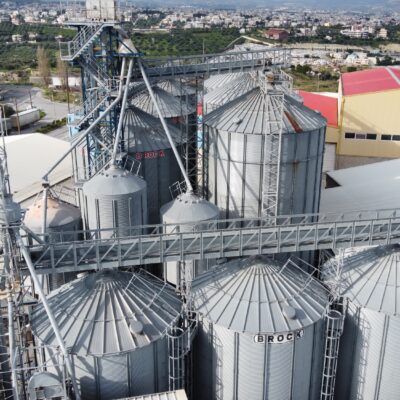
Chemical Manufacturer Upgrades Critical Systems
A midwestern US chemical plant plays an integral part of the worldwide supply of stock for animal feed, refined human vegetable oils, and various other products. This family-owned operation has been a powerhouse in soybean processing, specifically, for more than half a century. As such, their processing areas for that product specifically are considered the epitome of “critical” and run year-round with only a single annual shutdown to handle most large-scale maintenance and upgrade projects.
As this plant looked to install the first ever automation to their critical extraction and shared cooler areas, they knew that this would be a large-scale project that would encompass a multitude of equipment and trades and that the installation would span several years. This project would require partners who could handle the technical scope as well as the extended and complex project management.
Read More | Posted In: Case Studies, Chemical Industry

DVR Module for Troubleshooting and Continuous Improvement
Effective mass production manufacturing operations involve both monitoring of production processes and continual improvement. ECS Solutions, Inc (ECS) has developed an innovative, powerful tool to help their clients develop peace of mind that their products are being manufactured accurately and efficiently while providing a platform to easily improve future interactions. The Process DVR tool satisfies the modern expectation that anything that can be observed visually should be recorded and easily viewed later. When used effectively, the result is truly optimized production control where the best-trained operators deliver accurate results with the least possible waste.
Data Historian capabilities have been built into many vendors’ SCADA systems for a long time. Astute process engineers can call up trending information that illustrates the states and conditions within an automated system, the multitude of lines crisscrossing an HMI terminal in a way their trained eyes can discern. This is an excellent tool by itself, provided that an operation has personnel who are trained to read and interpret the cryptic information that is returned from a standalone Historian. ECS believed that this was conceptually sound but that a more manageable solution would help to bring wider benefits to their processing clients.
Read More | Posted In: Bakery Industry, Beverage Industry, Chemical Industry, Clean in Place, Digitalization, Distilleries, Food Industry, Inductive Automation, Life Science Industry, SCADA

How to Identify, Quantify, and Mitigate Risk in Industrial Operations
A key responsibility of executives and managers in manufacturing is that of risk management. This refers to the obvious risk of physical operations and staff protection, but it also includes quite a bit more: risk to contracts, availability of brands of the direct employer and those of other clients, reputation(s), regulatory, and risk to public safety and health are all increasing concerns with the operating level of a senior executive or manager.
Risk identification is a critical first step; without which, corrective actions cannot be undertaken or could possibly be misguided. Because risks evolve constantly, it is rare that they can be spelled out in a succinct and comprehensive volume. One obvious solution is to install the correct staff in the tiers immediately below the executives but that often raises questions about the specific qualifications of these employees, their tenure and familiarity with every facet of their role within that organization, and whether an overarching net has been cast to identify and compartmentalize relative risks. Further concerns arise around whether an internal team is free of groupthink and whether they possess the proper experience, qualifications, and motivations. (more…)
Read More | Posted In: Bakery Industry, Beverage Industry, Chemical Industry, Food Industry, Life Science Industry, Metals Industry

The Process Functional Ecosystem
Companies that operate in multi-step, multi-ingredient batch processing operations employ a combination of complex procedures, business and operational systems, and communications. The range of tools and machinery used to process a potentially vast array of ingredients and process steps are what it takes to make processors successful. Entire working cultures emerge from these operations that foster a focus and achieve positive outcomes.
The more specialized the market and operation, the lower number of people who operate within that domain. This doesn’t always allow for regular interaction with a broad spectrum of manufacturing peers, which can leave individuals and organizations feeling they are so unique that they are relatively isolated. They frequently feel little confidence that people outside their close-knit internal group can effectively understand, let alone support them. The possibility exists that they are rare, but they are not entirely unique and there are outside firms that are also closely aligned and, in fact, true peers as well.
ECS Solutions (ECS) operates upon this landscape. They have established a collective corporate consciousness that is aligned with the DNA of their core clients: batch processors. ECS is immersed in the behaviors and characteristics of these clients, and it is reflected in nearly every aspect of their operation. (more…)
Read More | Posted In: Bakery Industry, Beverage Industry, Chemical Industry, Food Industry, Metals Industry, News
ECS Continues to Grow!

We are so excited to introduce you to new ECS team member, Jim Herwig, Systems Engineer 3.
Jim brings 45 years of professional experience and extensive technology expertise. Jim’s specialties are in process control systems using both PLC (Rockwell) and DCS (DeltaV & PROVOX) platforms. He also has extensive experience with data historian software and control system networks. In addition, Jim worked as an adjunct instructor at Muscatine Community College in Iowa for 20 years. Jim is working for us on a part-time basis as he moves into a “semi-retirement” stage in his career.
ECS is thrilled to welcome Jim to the family!